Loading game...
Strands Nyt
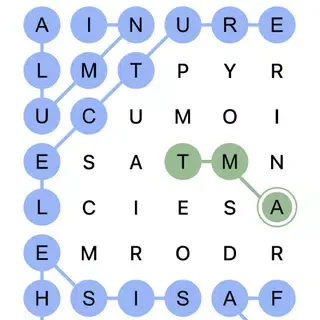
Strands is a free daily word puzzle from the New York Times where you'll find connected words sharing a common theme. Start by scanning for longer words initially to identify the theme, then connect letters horizontally, vertically, or diagonally. Look for common prefixes and suffixes, unusual letter combinations, and diagonal patterns that beginners often miss. You can track your progress through the Statistics page to monitor completion rates. The game resets daily with fresh challenges, giving you new puzzles to access.
How to Play Strands NYT: Rules and Strategies
To fully enjoy Strands NYT, you'll need to understand its basic rules and strategic approaches. In this word puzzle game, your objective is to find all connected words that form a theme.
Initially, identify and select letters that connect horizontally, vertically, or diagonally on the grid. When playing Strands NYT, begin by scanning for longer words, as these often provide clues to the puzzle's theme.
Connect adjacent letters to form words, focusing on longer ones first to reveal the theme.
Look for common prefixes and suffixes to help identify potential words. After finding several words, analyze their similarities to determine the theme. Use the hint feature sparingly when you're truly stuck.
Remember to check all directions when searching for connections, and don't overlook shorter words. The game resets daily, offering a new challenge with different words and themes.
Daily Themes and Pattern Recognition Tips
Understanding the daily themes in Strands NYT will greatly improve your solving speed and success rate. Each strands puzzle today follows a specific theme that connects all words, such as "Celestial Bodies" or "Kitchen Items." Look for patterns in the letters you've already found to deduce the theme early.
- Scan the grid for common prefixes and suffixes initially (re-, un-, -ing, -ed)
- Notice letter clusters that frequently appear together in English (th, ch, qu)
- Identify diagonal patterns, which are often overlooked by beginners
- Pay attention to word length distribution, as themes often have similar-length words
- Use process of elimination by tracking which letters remain unused
When you're stuck, review your highlighted letters and consider which thematic words might contain those letter patterns.
Comparing Strands to Other NYT Word Games
While Strands has quickly carved out its niche in the New York Times games collection, it's significant to distinguish how it differs from other popular word games like Wordle, Spelling Bee, and the Crossword.
Unlike Wordle, where you guess a single five-letter word, the strands game requires finding multiple words that connect through shared letters in a grid format.
Spelling Bee challenges you to create words from seven letters, but Strands focuses on pattern recognition within predetermined words.
The Crossword demands knowledge of clues and definitions, whereas Strands emphasizes spatial reasoning and letter sequences.
Consider how each game exercises different mental muscles: Wordle tests deduction, Spelling Bee builds vocabulary, Crossword evaluates knowledge, and Strands develops pattern recognition.
Choose your daily NYT word game based on which cognitive skill you're looking to strengthen.
Advanced Techniques for Solving Difficult Puzzles
When you've mastered the basics of Strands, you'll need specialized strategies to tackle those particularly challenging puzzles that might otherwise leave you stuck.
Consider these advanced techniques when investigating for the nyt strands answer today:
- Start with the longest words initially, as they typically have fewer possible positions on the board.
- Look for unusual letter combinations or rare consonants, which often provide clear starting points.
- Cross-reference potential words against the theme hint, eliminating words that don't fit contextually.
- Use the process of elimination by marking grid positions you've already examined.
- Create a mental map of word fragments, connecting partial solutions to build complete words.
Remember to scan diagonally and in reverse, as difficult puzzles often hide words in unexpected directions.
Track your progress methodically to avoid repeating unsuccessful attempts.
Setting Up Notifications and Tracking Your Progress
To improve your Strands NYT experience, you'll want to set up proper notifications and progress tracking systems that keep you engaged with daily puzzles.
When you play Strands online, navigate to your account settings through the main menu, then toggle "Daily Notifications" to on. Set your preferred time, ideally morning, to receive alerts for new puzzles.
Track your progress by visiting the Statistics page, where you'll find completion rates, average solving times, and streak counters.
Create a spreadsheet to record difficult words you encounter, noting patterns that challenge you. The NYT app automatically saves your gameplay history, including puzzles you've completed and abandoned.
Review this data weekly to identify improvement areas, targeting specific word categories or puzzle types that require further practice.
Frequently Asked Questions
-
Can I Play Strands NYT on Multiple Devices With One Account?
Yes, you can access Strands NYT across multiple devices with your single New York Times account. Just sign in with the same credentials on each device to track your progress and statistics consistently.
-
Does Strands NYT Offer a Colorblind Mode?
Yes, Strands NYT does offer a colorblind mode. You'll find this accessibility feature in the settings menu, making it easier for you to distinguish between different colored tiles while playing.
-
Are There Time Penalties for Incorrect Letter Selections?
No, there aren't any time penalties for incorrect letter selections in Strands. You can freely try different letters without worrying about losing time. Your gameplay experience remains unaffected by wrong choices.
-
Can I Challenge Friends to the Same Daily Strands Puzzle?
Yes, you can challenge friends! Just share the daily Strands puzzle link with them, and you'll both solve the same puzzle. Compare your results afterward to see who found more words or finished faster.
-
Will My Streak Reset if I Miss a Day?
Yes, your streak will reset if you miss a day. That's how Strands tracks consecutive puzzle completions. To maintain your streak, make sure you solve the daily puzzle before it refreshes.
-
What Time Does the Daily Strands NYT Puzzle Reset?
The daily Strands NYT puzzle resets once every 24 hours, typically at midnight Eastern Time. Players in other regions can access the new puzzle based on their local time conversion. Checking back after the reset ensures you’re always playing the latest daily challenge.
-
Is Strands NYT Free to Play or Does It Require a Subscription?
Strands NYT can be played for free with limited access. Some features, statistics, or extended gameplay options may require an active New York Times Games subscription. Availability can vary, so it’s best to check your account status to see what’s included.
-
Does Strands NYT Provide Hints or Help During Gameplay?
Yes, Strands NYT offers built-in hint options to help players when they feel stuck. These hints are designed to guide you without giving away full solutions, making them useful for maintaining progress while still keeping the puzzle challenging and rewarding.
-
Can I Replay or Review Past Strands NYT Puzzles?
Access to past Strands NYT puzzles depends on your account and subscription level. Some users can revisit previous puzzles through the NYT Games archive, while others may only have access to the current daily puzzle. Archive availability may change over time.
-
Is Strands NYT Considered More Difficult Than Other NYT Word Games?
Strands NYT is generally considered moderately challenging compared to other NYT word games. It focuses more on theme recognition and pattern discovery rather than pure vocabulary. This makes it appealing to players who enjoy logical word connections and thoughtful problem-solving.
What is Strands Nyt?